Tightening the limit on foreign players in Armenia: will it help the national team or hurt the clubs?
- Author: Vahe Hakobyan
- Sportaran
In Armenian football, the tightening of the limit on local players is once again being discussed. The Football Federation of Armenia has proposed increasing the mandatory number of Armenian players on the field from three to four, and in the squad list from nine to ten.
The initiative has caused a split among Premier League clubs: some have supported the changes, while others have opposed them. But the main question remains the same: will tightening the limit actually help the Armenian national team?
FFA’s argument: expand the national team’s selection pool
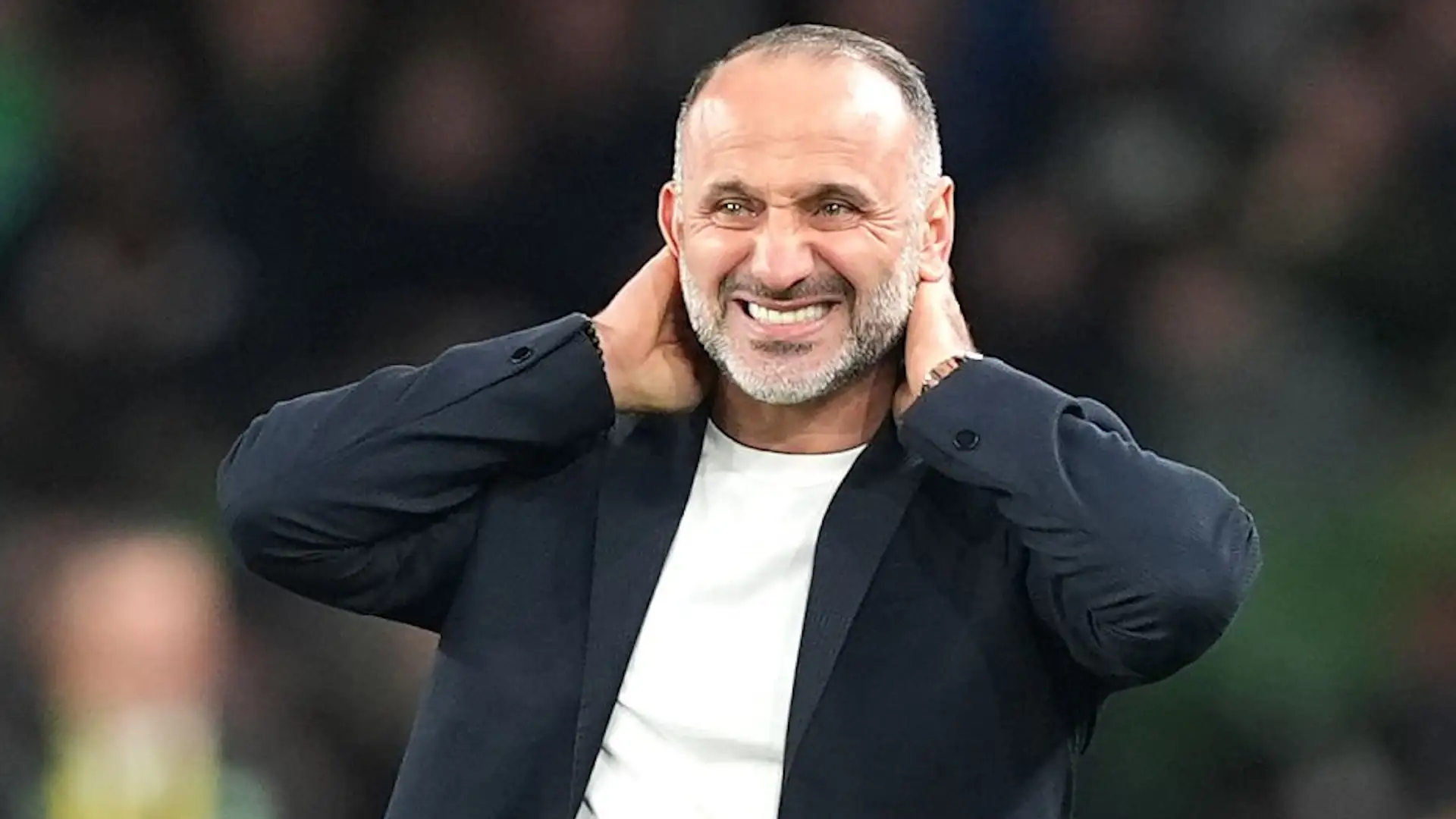
The core idea of the reform is to increase the number of Armenian players receiving playing time. This position has also been voiced by national team head coach Yegishe Melikyan: the more players there are, the wider the selection.
At first glance, the logic is clear. However, in Armenian realities, things are not so straightforward.
The contradiction: clubs vs national team
Interestingly, Yegishe Melikyan himself opposed the limit while working at “Pyunik.” The reason is simple — restrictions hinder club development.
And in Armenia, clubs essentially are the entire football ecosystem. There is no significant state support and no strong infrastructure. Therefore, any artificial limitation directly affects the quality of the league.
This creates a paradox: by strengthening the limit, we potentially weaken club football while expecting improvements in the national team’s results.
Will the limit improve player quality?
The limit can indeed increase competition among Armenian players. But the key problem of the national team is not quantity — it is quality and balance.
Armenia already has a shortage of players in several positions. Increasing the limit is unlikely to fix this. Moreover, practice shows how clubs adapt to restrictions.
How clubs bypass the limit
Instead of real competition, something else often happens: certain positions simply become “reserved” for Armenian players.
For example, at “Pyunik,” Gevorg Tarakhchyan competes not with a strong foreign player, but with the aging Edgar Malakyan. As a result, the level of competition decreases, and a place in the starting lineup becomes almost guaranteed.
In fact, Tarakhchyan competes for a spot not with Lithuania international Matas Vareika, but with an experienced, older player. Essentially, he does not need to do much to secure a starting place. A similar situation exists in the goalkeeper position.
At “Urartu,” Erik Piloyan and Khariton Ayvazyan, as well as Nicolas Kalukyan and Edik Vardanyan, compete mostly among themselves, and so on.
At “Alashkert,” there are also fully “Armenian” positions — goalkeeper, full-backs, and central midfielders. Even with the limit in place, there is not a single Armenian player in the club competing for a spot against Momo Touré or Farayola. On the other hand, Karen Nalbandyan has no real competition for his position, even among foreign players.
Sometimes, paradoxical situations arise where a player has no competition at all, even within the squad.
Positive examples — and their risks
There are exceptions. For example, at “Ararat-Armenia,” Armenian players genuinely compete with foreign players and often win their place in the lineup. Eloyan, Shaghoyan, Serobyan, and Kamo Hovhannisyan compete with foreign players in their positions and frequently come out on top. However, if the limit is increased, injuries or suspensions of two Armenian players would prevent “Ararat-Armenia” from replacing them with their direct competitors, forcing the team to reshape the lineup to maintain more “purely Armenian” positions.
A similar situation can be seen at “Noah,” where several local players compete on equal terms with foreigners. Gor Manvelyan competes with Ulad Omar, Sergey Muradyan with other defenders, Hambardzumyan with Boakye, and so on. Again, introducing a stricter limit would force the creation of 2–3 fully “Armenian” positions.
But these are precisely the kinds of examples that could suffer from tightening the limit. In cases of injuries or suspensions, coaches would be forced not to strengthen the squad with the best available players, but to comply with formal requirements.
As a result, “fixed” Armenian positions would reappear.
The main risk: a uniform model across all clubs
If the limit is increased, there is a high probability that most clubs will adopt the same strategy — assigning 2–3 positions specifically to Armenian players. This would create an even greater imbalance: a surplus of players in some positions and a shortage in others.
Which means the national team’s main problem — the lack of quality players across all positions — would remain unresolved.
Who supports the reform — and why it matters
It is noteworthy that the increase in the limit has been mainly supported by First League clubs.
These are teams that:
-
Do not face the demands of international competitions
-
Do not represent Armenia in European tournaments
-
Do not yet compete at the Premier League level
In fact, only “Sardarapat” is likely to benefit from the new limit in the near future at the top level. This raises a logical question: why is the fate of Premier League clubs largely being decided by those who do not yet play in it?
Opposed to increasing the limit:
“Noah”
“Alashkert”
“Ararat”
“Gandzasar”
“Ararat-Armenia”
“Van”
Supported the FFA proposal:
“Urartu”
“Pyunik”
“Sardarapat”
“Hayk”
“Syunik”
“Shirak”
“Andranik”
Conclusion
The idea of increasing the number of Armenian players on the field may seem logical, but in practice it could produce the opposite effect. The limit does not create players — it merely redistributes playing time. Without systemic development, academies, and competition with strong foreign players, player quality will not improve.
Thus, tightening the limit appears to be a short-term measure with long-term risks for both clubs and the entire Armenian football system.
In essence, this is a substitution of concepts: instead of developing infrastructure, academies, and a player development system, a mechanical increase in the number of local players on the field is proposed. But without a solid foundation, this does not create new footballers — it only redistributes playing time.
Discuss the news!
Jump to comments ↓
Comments
0