Five Debuts and One Conclusion: Who Is Ready for the Level of the Armenia National Team
- Author: Vahe Hakobyan
- Sportaran
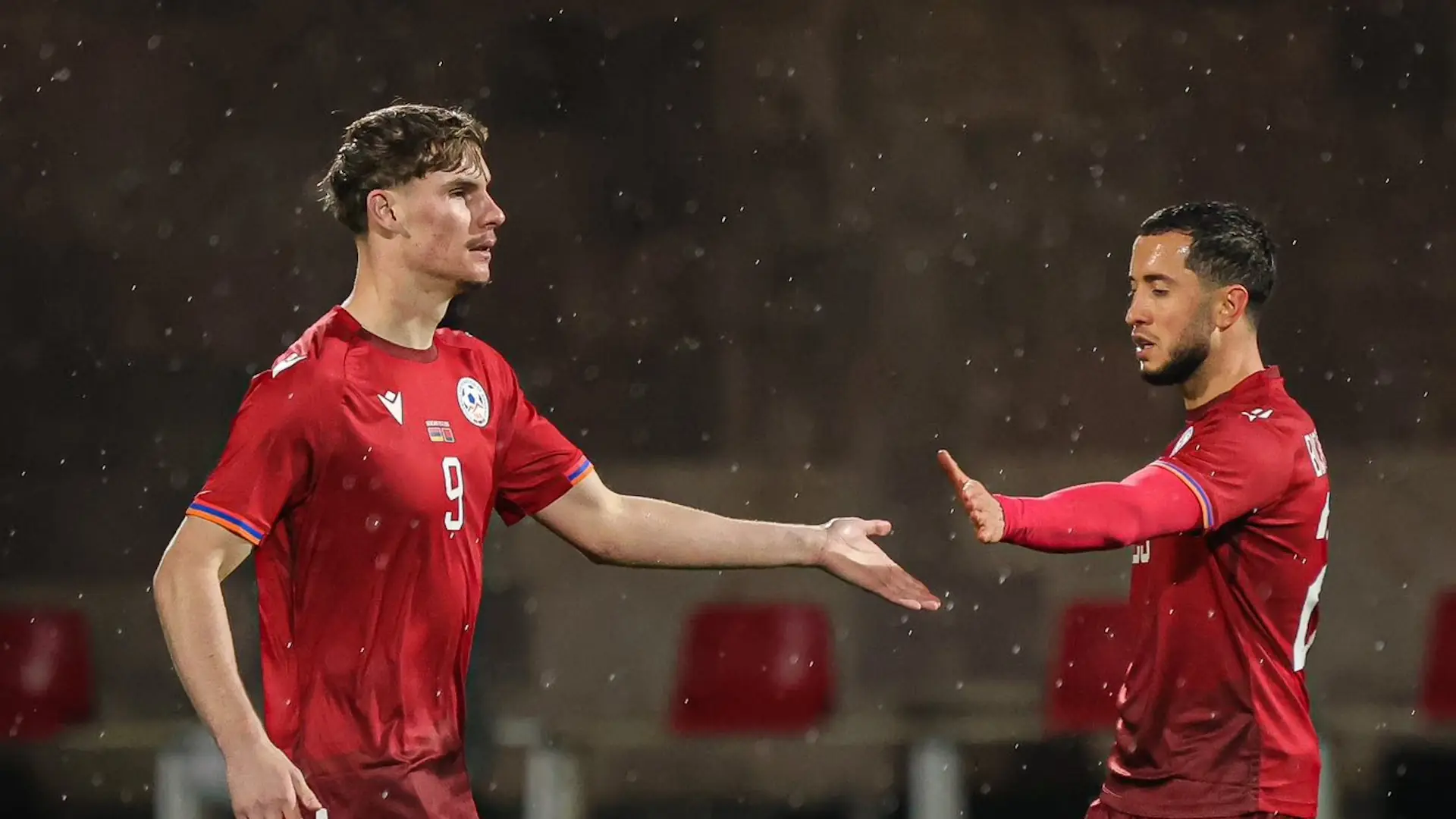
On March 29, in a friendly match against Belarus (1–2), five players made their debuts for the Armenia national team: Finn Geragusian, Julio Bueno, Narek Hovhannisyan, Karlen Hovhannisyan, and Artur Askarian.
Four of them represent the youth national team and are between 18 and 20 years old, viewed as long-term reinforcements. Standing out among them is Julio Bueno — a 29-year-old naturalized Colombian who has been playing in the Armenian league for over five years. After receiving citizenship, he became eligible for the national team, and head coach Yegishe Melikyan invited the experienced defender to strengthen a problematic position. This became especially relevant after former captain Varazdat Haroyan retired from international duty.
It is worth noting that detailed statistics for this match are not publicly available. Therefore, we rewatched the game to assess the performance of each debutant.
Armenia operated in a hybrid 4-2-3-1 formation, which transformed into a 3-4-1-2 during the match.
Debutants’ Performance Against Belarus
Julio Bueno (29, centre-back, Ararat-Armenia)
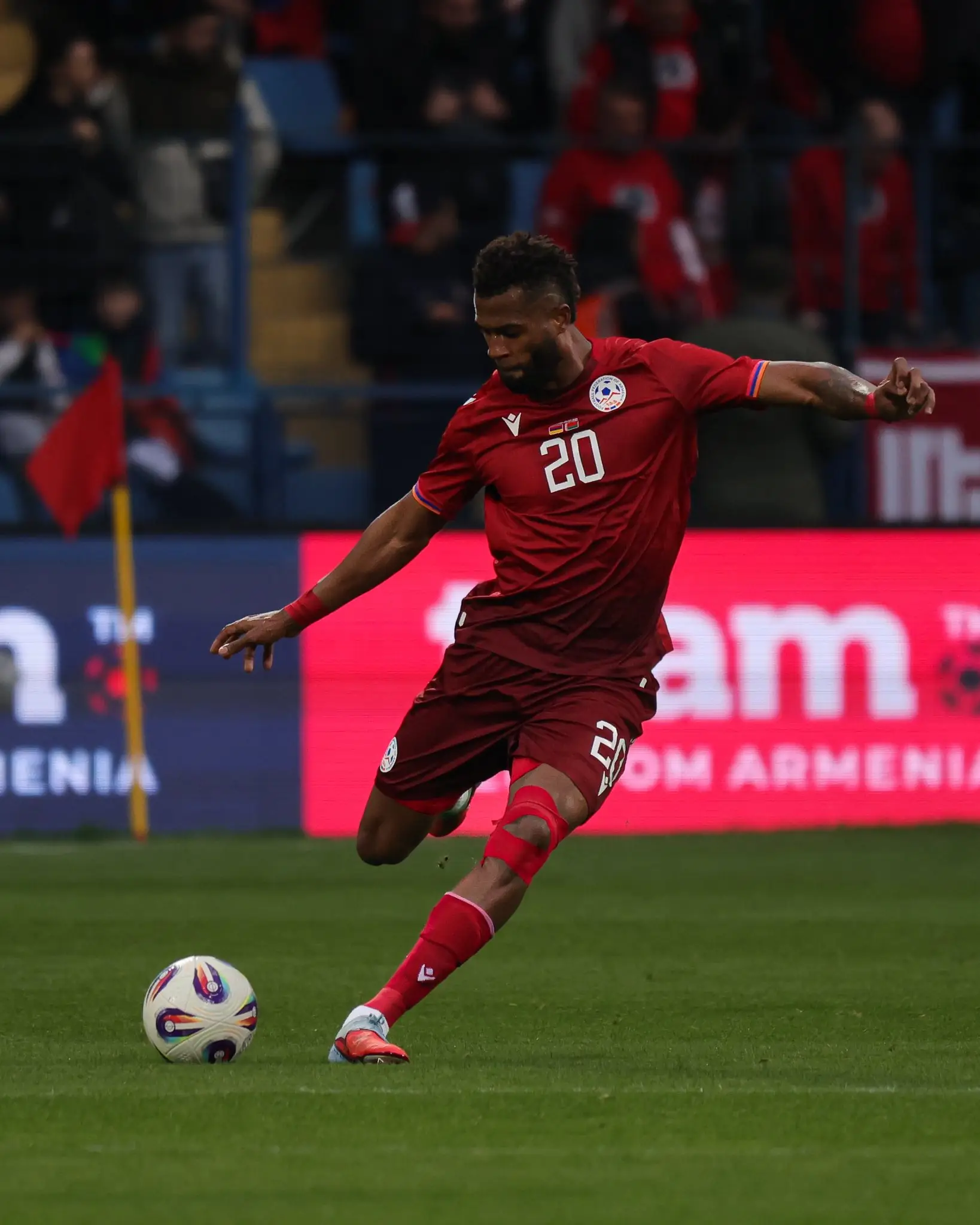
Bueno started the match and played the full 90 minutes as the right centre-back alongside Sergey Muradyan (Noah).
Formally, he cannot be directly blamed for the conceded goals, although he was close to the scorers in both situations. Overall, it was a systemic defensive issue — each defender underperformed in certain moments, including Bueno, who could have been more aggressive in duels.
In other aspects, however, he had a very solid game. Notably, he showed confidence in building from the back under pressure. Bueno was not afraid to carry the ball forward for 5–10 meters and found options to progress attacks through passing.
With players like Ugochukwu Iwu and Eduard Spertsyan absent, the midfield rarely dropped deep to help in build-up play. This complicated the start of attacks, and Bueno’s actions were key in helping the team play out from the back.
Narek Hovhannisyan (19, left winger, BKMA)
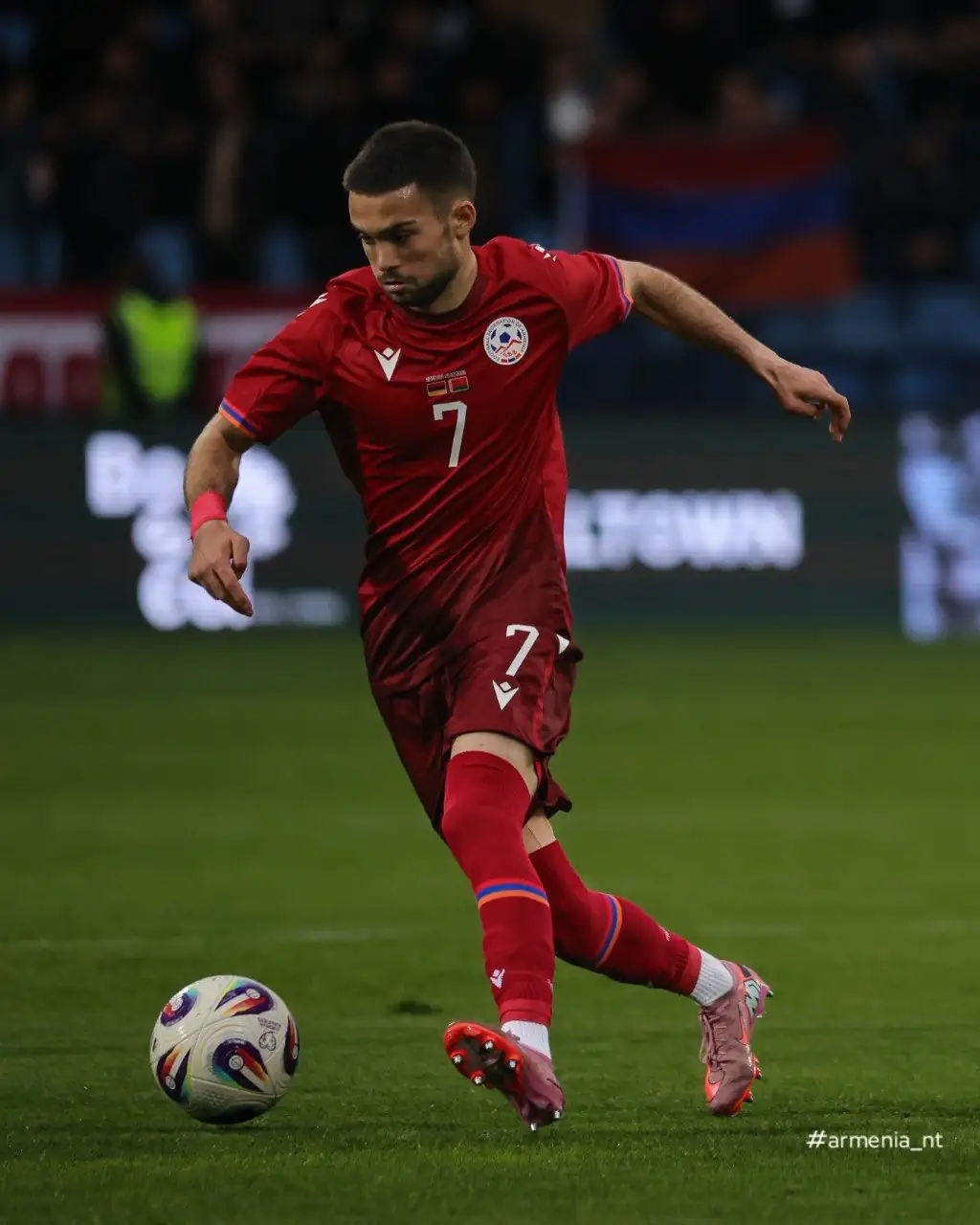
Hovhannisyan unexpectedly started in a position previously occupied by Lucas Zelarayán and occasionally by Zhirayr Shaghoyan, who was not called up for this match.
This is currently a problematic area for the team — there are few right-footed wingers available. Essentially, it comes down to Shaghoyan and Hovhannisyan.
However, in the second half, Gor Manvelyan appeared in this role and looked far more convincing. He played with greater freedom, drifting inside in the style of Zelarayán, whereas Hovhannisyan stayed too wide. This allowed Nair Tiknizyan to use the left flank more actively, leading to several dangerous moments.
Manvelyan hit the post, delivered several sharp passes, and his assist to Kamo Hovhannisyan in the 70th minute was one of the best moments of the match.
As for Narek, it was evident that he does not yet fully understand the coaching staff’s requirements. He often failed to notice Tiknizyan’s overlapping runs, rarely moved inside, and mainly stayed on the wing.
From a tactical standpoint, his performance was underwhelming. However, technically he showed high potential: good ball control, speed, and dribbling. In one episode, he delivered an excellent diagonal pass that led to a shooting opportunity for Vahan Bichakhchyan.
He also had two shots, both off target.
Overall, despite a mixed debut, his potential is clear, and he could strengthen the national team in the future. He played 64 minutes.
Karlen Hovhannisyan (20, central midfielder, Pyunik)
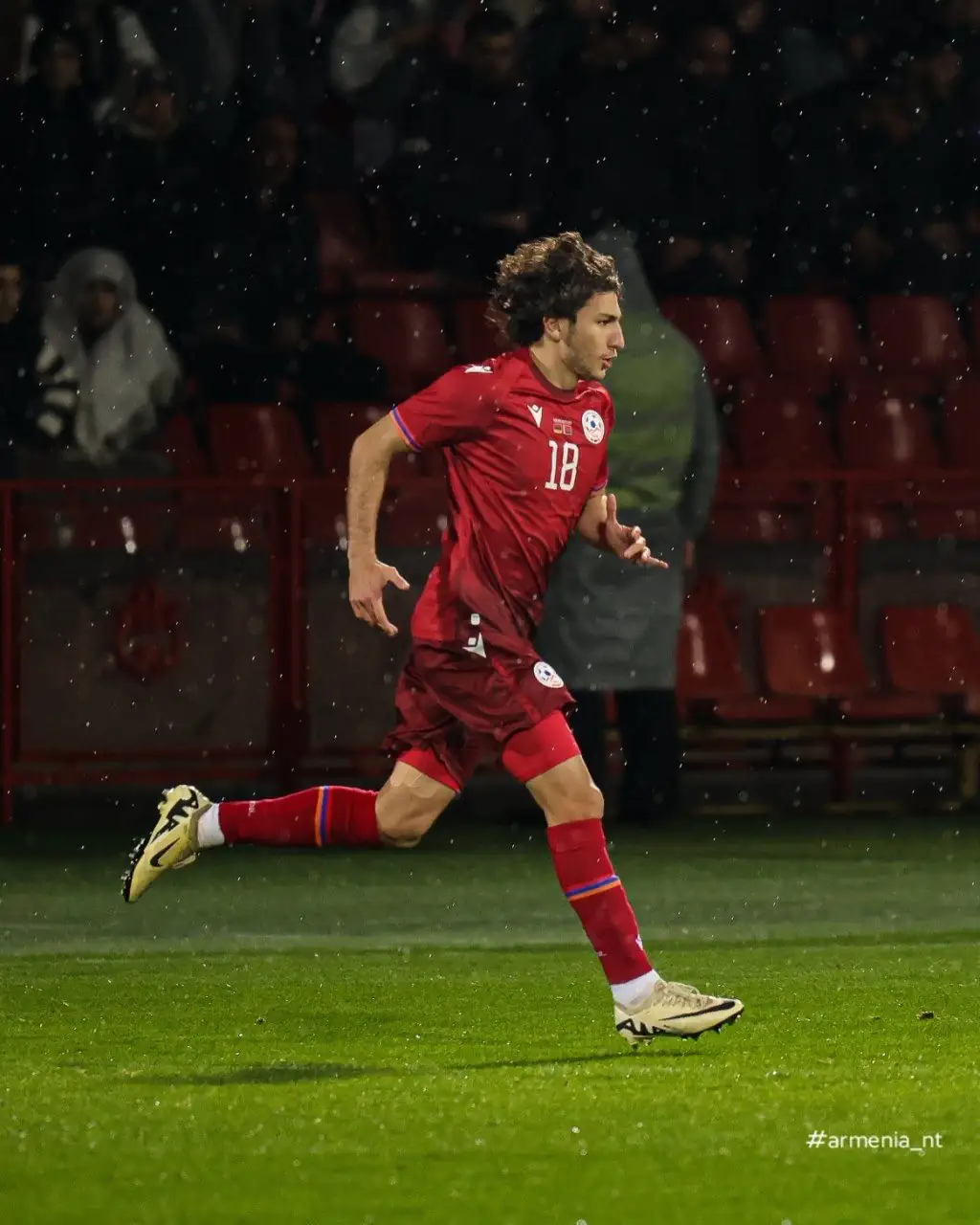
Karlen came on in the 64th minute, replacing Tigran Avanesyan, and took on the role of a deep-lying playmaker.
For a debut, he looked fairly confident: he lost possession only once and played carefully, though he did not often make progressive actions. In the 80th minute, he had a chance to shoot from the edge of the box — he made a quick decision, but the attempt was inaccurate. In that situation, he could have been more composed and prepared the shot better, or avoided shooting with his right foot altogether.
Karlen is a player who constantly seeks the ball, finds space, and tries to dictate the direction of attacks, somewhat resembling Luka Modrić in style. However, in this match, he played more backward than forward, likely due to nerves.
Still, he demonstrated his strengths: composure under pressure, refined short-passing technique, and constant movement.
Artur Askaryan (19, central midfielder, BKMA)
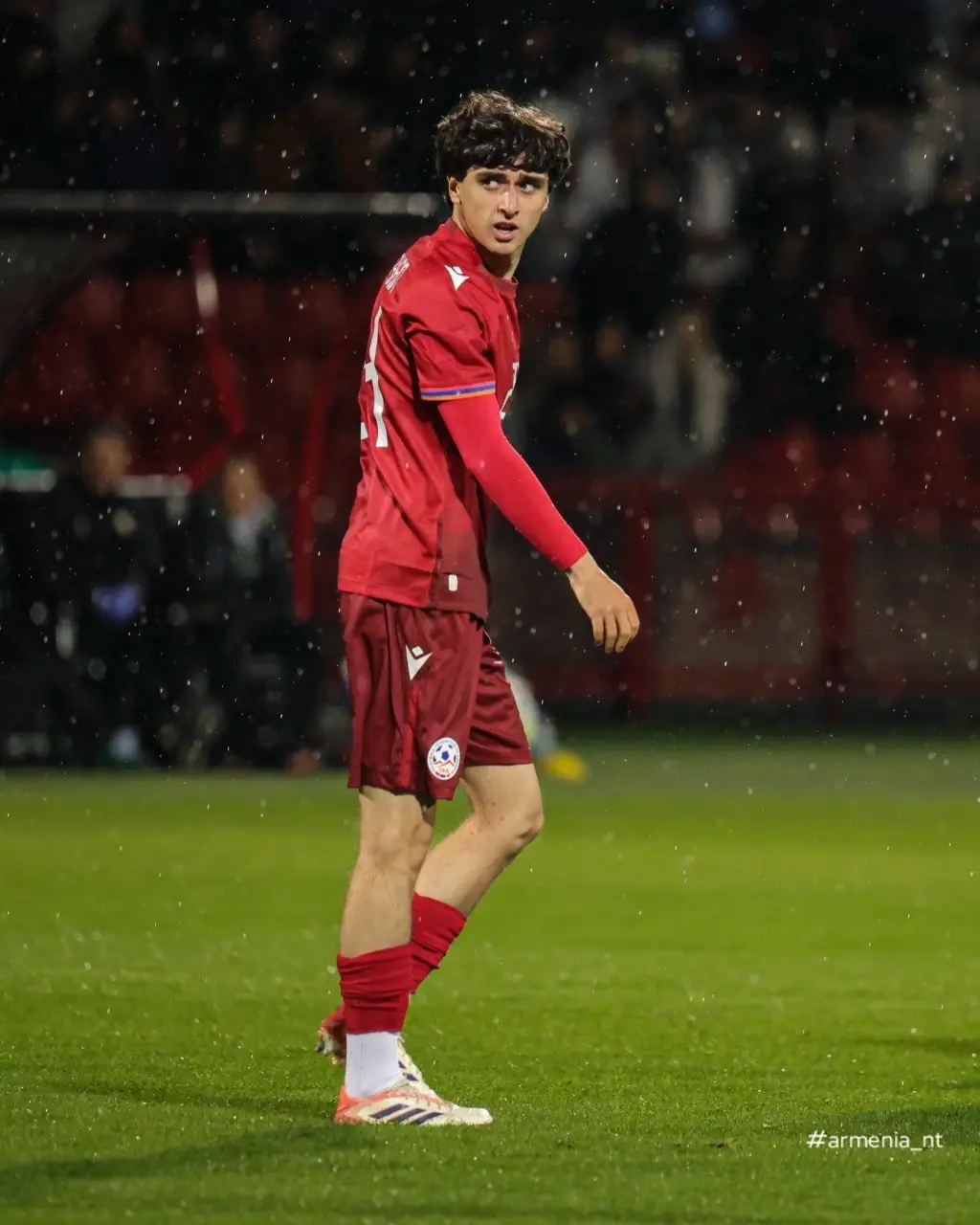
Askaryan is almost a mirror image of Karlen Hovhannisyan in terms of playing style. Using both simultaneously is probably not optimal due to their similar profiles, but this was a friendly match and provided an opportunity to assess all debutants. At BKMA, Askaryan effectively replaced Hovhannisyan after his return to Pyunik, while in the youth national team he serves as a rotation player in the same role.
Artur entered the match in the 77th minute and had limited time. Just two minutes later, he lost the ball in midfield, which led to a dangerous attack by the opponent.
At the same time, he successfully connected with Tiknizyan on the flank several times, but like Karlen, preferred safe options and avoided risky forward passes.
Finn Geragusian (18, forward, Sunderland U21)
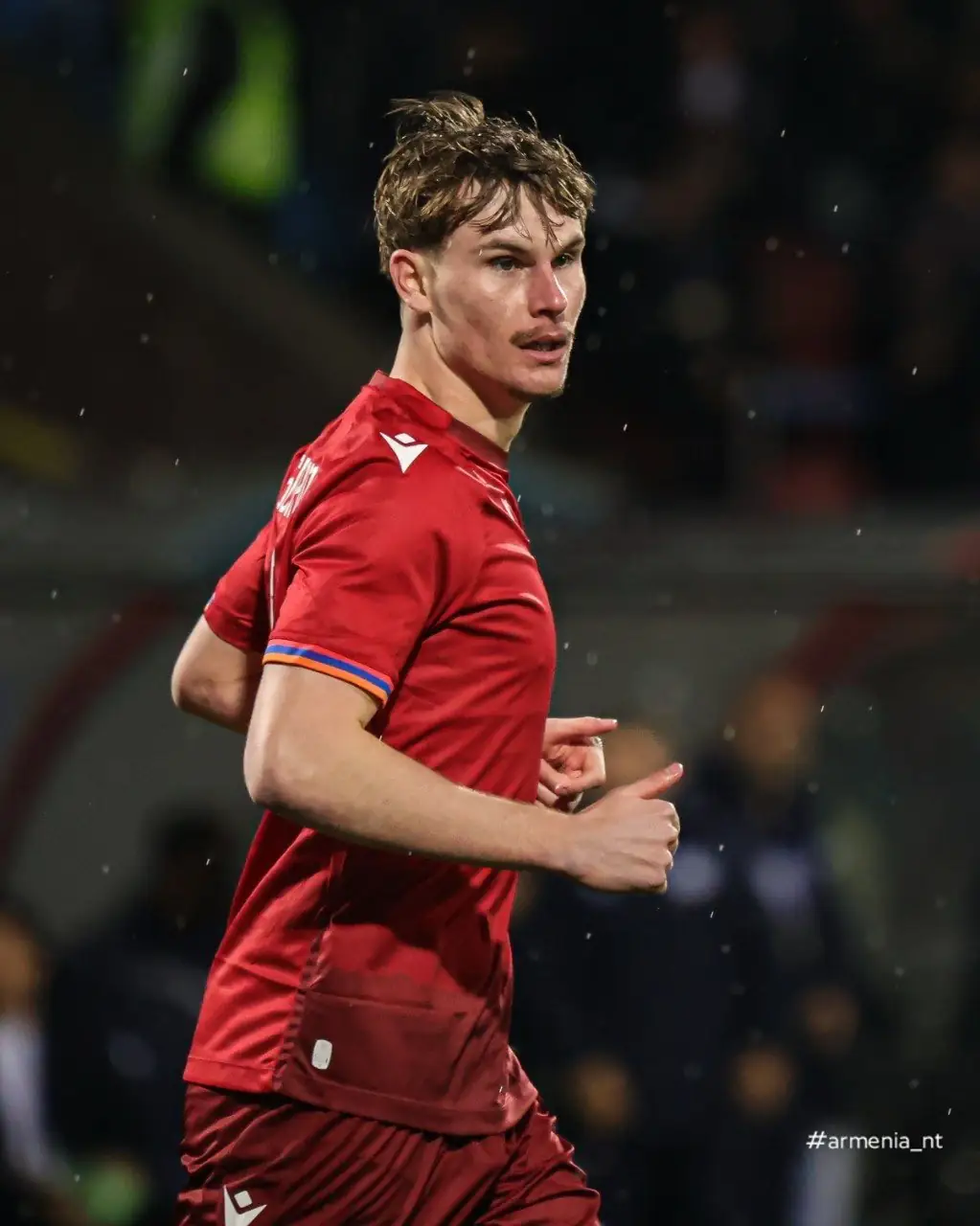
Geragusian came on in the 64th minute, replacing Ranos, and immediately got involved in the game.
He engaged in duels with physically strong Belarusian defenders and managed to hold up the ball on several occasions. In the 67th minute, he had a clear scoring chance: after a great combination involving Georgiy Harutyunyan and Nair Tiknizyan, he shot just over the bar.
Tiknizyan’s pass was not the easiest to control, forcing Finn to lift his leg high, which affected the accuracy.
After that moment, he faced the reality of senior football — Belarus defended very compactly, and the striker was largely isolated, not touching the ball again with his foot. Despite several dangerous crosses into the box, he could not win positioning battles.
Nevertheless, his off-the-ball movement and understanding of the game stood out — he consistently made runs and offered himself to teammates.
Conclusion
It is worth noting that in this match, Vahan Bichakhchyan, Artur Serobyan, and Gor Manvelyan clearly outperformed the younger newcomers. They played with more freedom, creativity, and confidence, unafraid to take responsibility.
To some extent, the presence of multiple debutants allowed them to assume leadership roles and perform with greater confidence. This was especially evident with Vahan Bichakhchyan, who played the full 90 minutes and remained the main creative force for most of the match. Before the introductions of Manvelyan and Serobyan, nearly all attacking danger came from him.
Looking ahead, with the return of Ugochukwu Iwu and Eduard Spertsyan, this team has the potential to play more cohesive and structured football in official matches.
However, two key positions remain unresolved — centre-forward and left winger. On the left flank, Gor Manvelyan could establish himself if he maintains his current form. In attack, the situation is more complicated: Ranos had a weak game, while Geragusian is still very young, though he could be given opportunities in the future, for example in the Nations League.
It is also possible that Artur Miranyan will regain top form and become the main option at centre-forward. For now, however, Geragusian appears to be the most promising candidate for that role.
At present, among the five debutants, Bueno — and to some extent Geragusian — look closest to the national team level, largely due to the lack of competition in attack. At the same time, Narek Hovhannisyan will certainly have more chances to prove himself: the team needs a player of his profile, and it is important to accelerate his adaptation to senior international football.
Discuss the news!
Jump to comments ↓
Comments
0