What has changed since the last Armenia — Ireland meeting
- Author: Vahe Hakobyan
- Sportaran
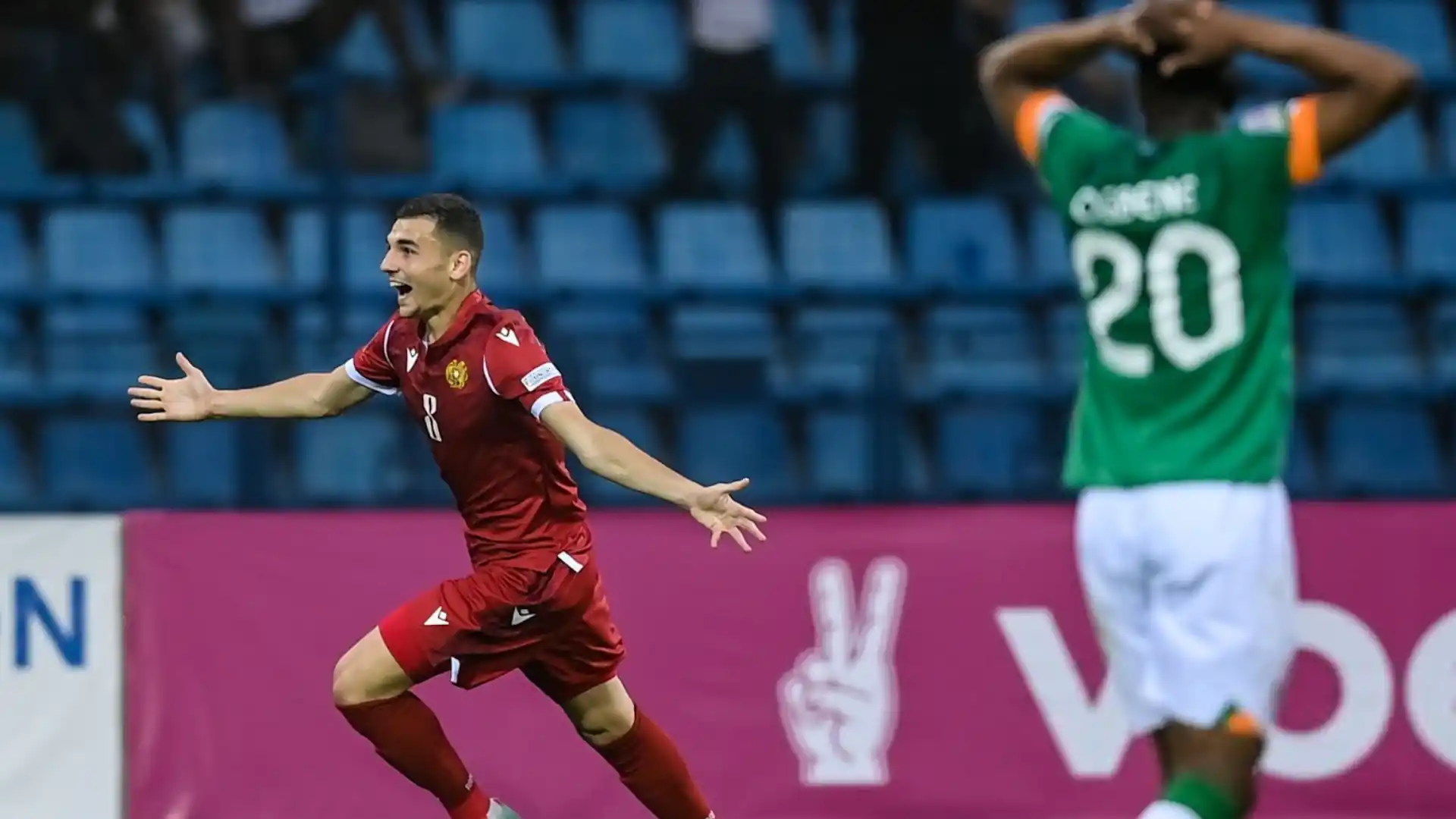
On September 9, Armenia and Ireland will face off in the second round of Group F of the 2026 World Cup qualifiers. The match will take place in Yerevan at the Vazgen Sargsyan Republican Stadium.
Head-to-head history: narrow margins and maximum nerves
The teams have met 4 times, all in official competitions. Ireland has three wins, Armenia — one, and each time the outcome was decided by a single goal.
The first encounters came in 2010–2011: 1:0 in Yerevan and 2:1 in Dublin — both victories for Ireland.
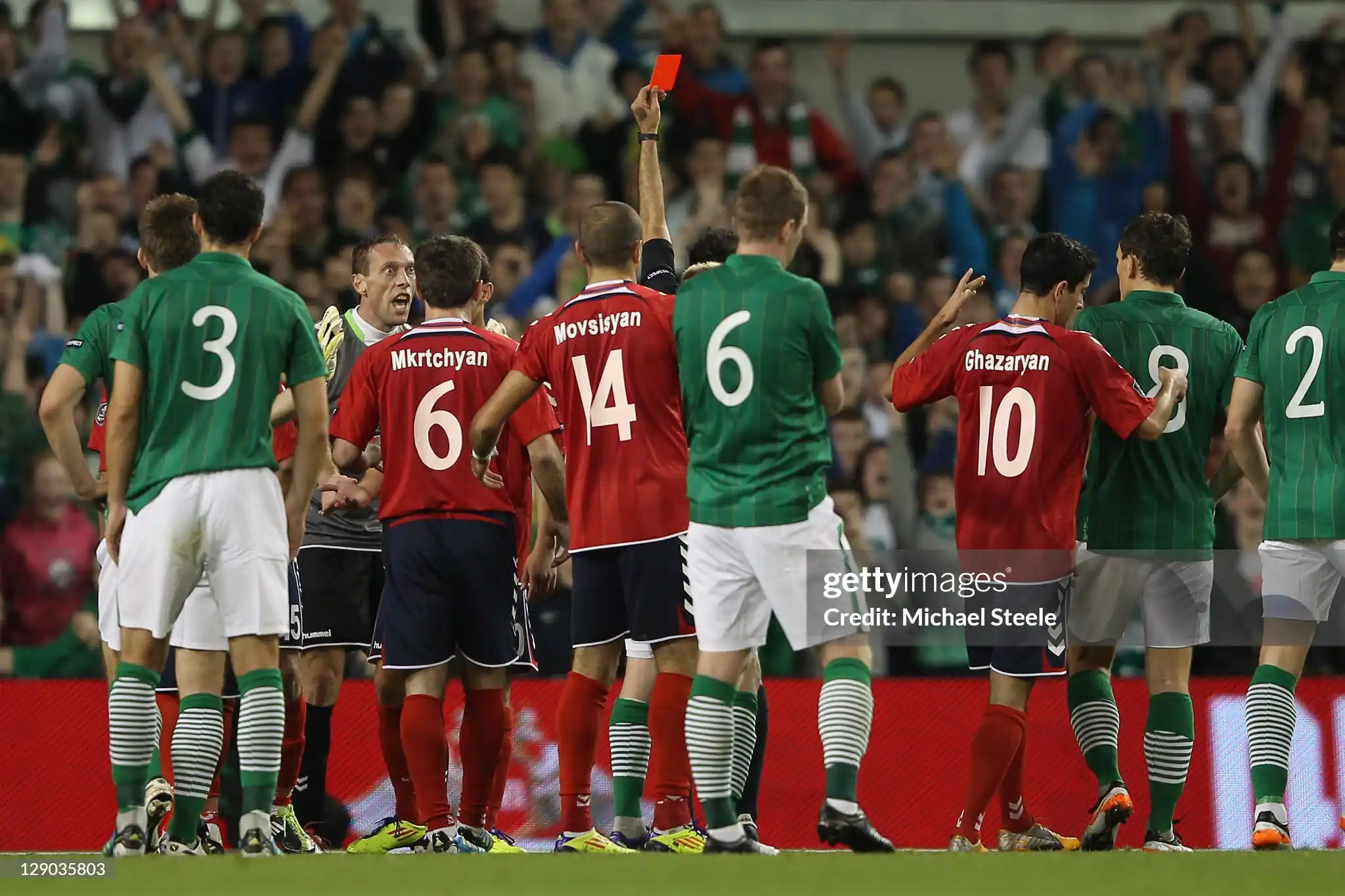
A special chapter — Dublin 2011. Back then, Vardan Minasyan’s Armenia was chasing a historic playoff spot for Euro 2012, playing bold and vibrant football. But in the 26th minute, Spanish referee Iturralde González sent off Roman Berezovsky for an alleged handball outside the penalty area — an incident that remains controversial to this day. Even with ten men, Armenia played with dignity, scored through Henrikh Mkhitaryan, but Ireland took the playoff ticket.
Remarkably, from that squad, Hovhannes Hambardzumyan, Henrikh Mkhitaryan, Hrayr Mkoyan, Edgar Malakyan, and Seamus Coleman are still active. We won’t see them on the pitch on September 9, though Hambardzumyan and Coleman are still in their national teams’ squads.
Nations League 2022: trading home wins
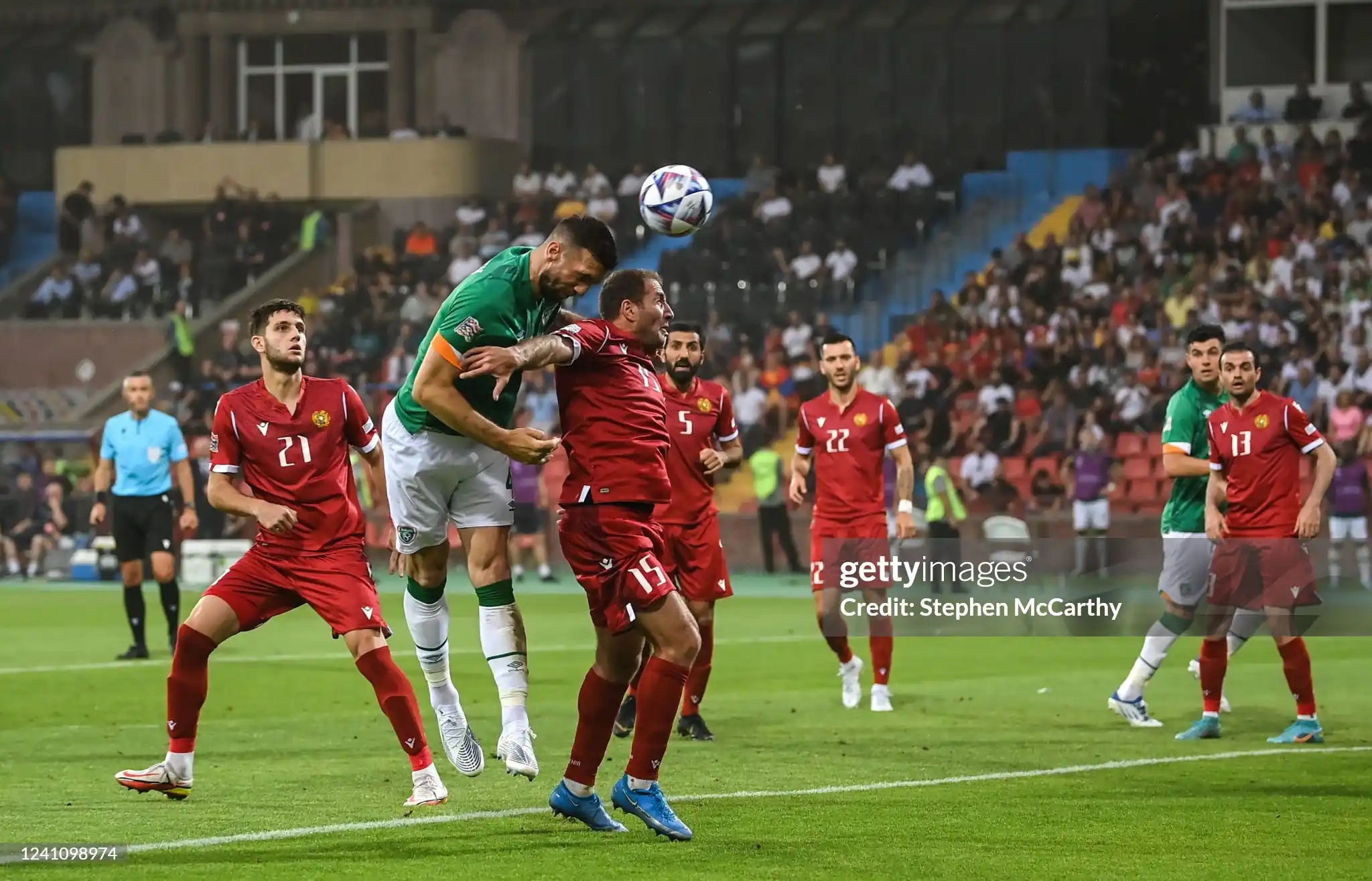
In 2022, in the UEFA Nations League, the teams went home with identical outcomes: 1:0 in Yerevan — Armenia’s victory, and 3:2 in Dublin — Ireland’s success. A close, hard-fought duel where the home sides prevailed.
What happened to Armenia in these three years
Coaches, form, and trends
After Alexander Petrakov’s promising spells in 2023 (a 4:2 win over Wales, draws with Turkey and Wales), regression appeared in 2024. John van’t Schip’s period was marked by failures, including heavy defeats against Georgia and Kosovo, after which he was replaced. In 2025, Yegishe Melikyan took charge. It’s still too early to judge — one game against Portugal is not enough material.
Squad: attack improved, defense lost stability
Attack. Structurally, little revolution: still no classic “number nine.” Just like three years ago, the main creative figure is Eduard Spertsyan. Supporting roles are now taken by Ugochukwu Iwu (functionally covering the role once filled by Artak Grigoryan) and Vahan Bichakhchyan (similar tasks to Khoren Bayramyan in matches against Ireland). Overall, in terms of player profiles and confidence, the attack has become more varied and daring.
Defense. This is where the change is most felt. In 2022, the core was experienced — Haroyan, Calisir, Mkoyan, Hambardzumyan, Voskanian. Not super quick or technical, but disciplined, fearless in challenges, always holding their lines, and Calisir was excellent at starting attacks with his first pass. Now the backbone is defenders aged 20–24, and under the high stress of qualification, mistakes become more costly.
The arrival of Nair Tiknizyan finally solved the long-troubled left flank, but his contribution is more about ball progression and attack than pure defending.
Another issue — no clear No. 1 in goal: back then there was understanding with David Yurchenko, while now stability is lacking due to Ognen Čančarević’s injury and physical decline.
Depth is also an issue. Earlier, if Mkoyan was out, Taron Voskanian could step in without loss of quality. Now Stepan Mkrtchyan’s injury is a big blow — his role has no equal replacement. This also affects buildup: when defenders make mistakes in early phases, the attack is forced to start in unfavorable positions.
Conclusion on Armenia: more creativity and quality up front — a plus; less stability and depth at the back — a minus. No balance.
What has changed in Ireland
Since July 2024, Icelander Heimir Hallgrímsson has brought order: Ireland takes care of business against equals and weaker teams, while usually losing to favorites. In the last Nations League cycle, they finished 3rd in a group with England, Greece, and Finland (two wins against the Finns, two losses each to England and Greece). Then, in the March 2025 playoffs, they beat Bulgaria twice and secured their place in Division B. Before WCQ — draws with Luxembourg (0:0) and Senegal (1:1).
Squad and style
This is no longer a purely “British” team relying on crosses. The attacking group now has bright individual talents: Finn Azaz, Sammie Szmodics (will not play vs Armenia), Evan Ferguson, and Troy Parrott (also injured). Even without them, there are Ogbene, Johnston, McAteer — mobility, flexibility, positional interchanges.
A telling marker of depth: in 2022 vs Armenia, Michael Obafemi played (he’s only 25 now), but today he can’t break into the packed forward line.
Conclusion on Ireland: attacking individual power has grown, and off-the-ball discipline has improved. The team is predictably reliable within its tier.
Key duels and tactics
-
Armenia’s left flank (Tiknizyan) vs Ireland’s right side (Doherty/Ogbene). Armenia now progresses better down the left corridor, but Ireland loves to break there with sprints and runs in behind.
-
Ireland has its own Tiknizyan on the left defensive flank — Ryan Manning, who plays a special role in attack. That could open spaces for Barseghyan or Bichakhchyan.
-
Spertsyan vs Cullen/Knight. If Spertsyan gets space between the lines, Armenia can build multi-phase attacks; Ireland will try to close central channels and force Armenia into flank crosses.
-
Armenia’s young CBs vs Ferguson. Physical battles and second balls after knockdowns — high-risk area for the hosts.
-
Set pieces. Ireland always pays attention to them; for Armenia it’s critical not to concede dangerous free kicks near their box.
-
Armenia’s possible edge: the unpredictability of Zelarayán, Barseghyan, and Spertsyan, plus long shots. But in goal will be Kelleher, currently in excellent form and man of the match against Hungary.
Lineups from 2022 Nations League
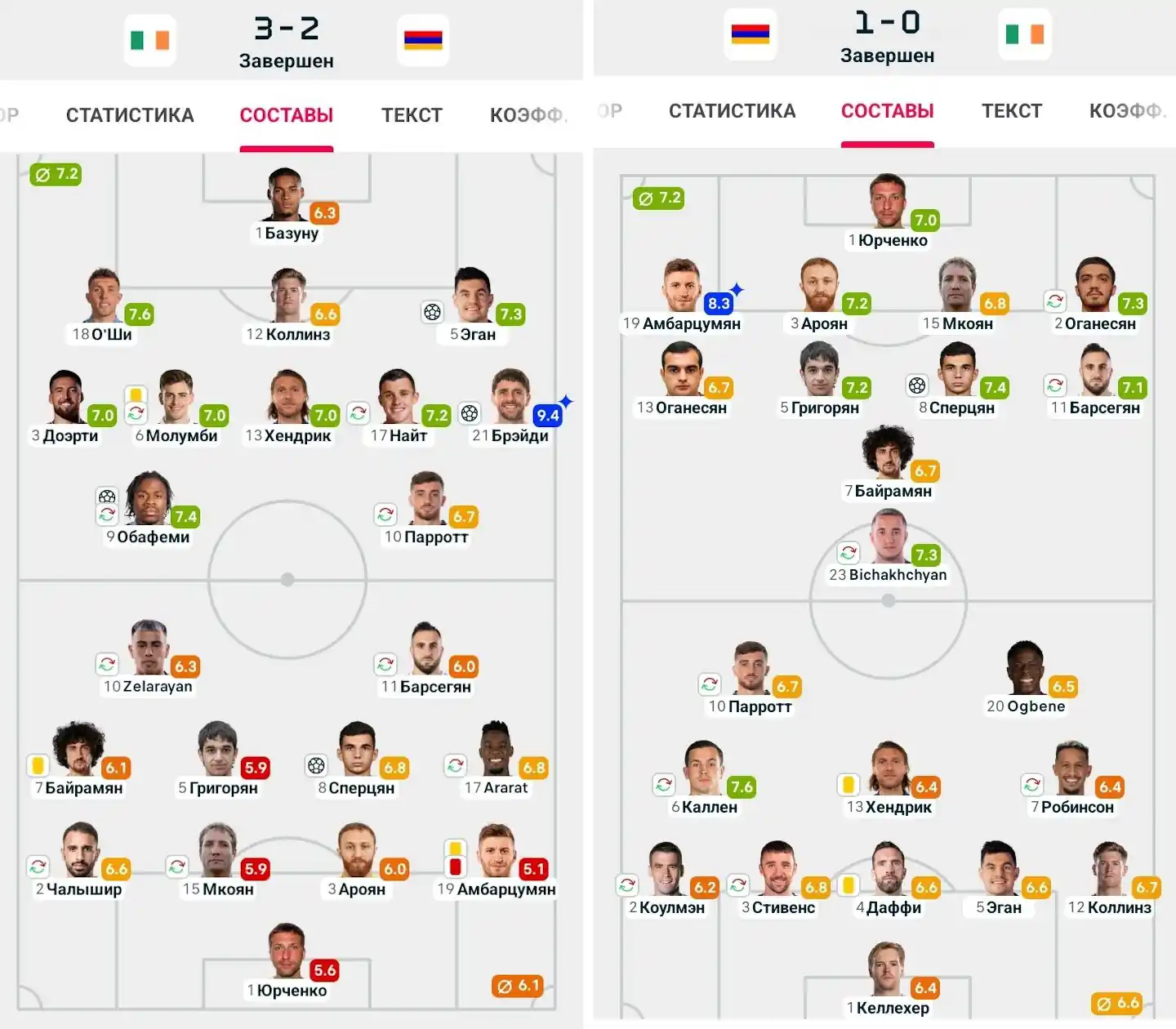
September 27, 2022 — Ireland 3:2 Armenia
Ireland (3-5-2): Bazunu — O’Shea, Collins, Egan — Doherty, Molumby (51, Hourihane), Hendrick, Knight (76, Browne), Brady — Obafemi (86, Hogan), Parrott (76, Robinson).
Coach — Stephen Kenny.
Armenia (3-5-2): Yurchenko — Calisir (K. Muradyan), Haroyan, Mkoyan (60, Voskanian) — Jordi Ararat (60, Dashyan), Artak Grigoryan, Eduard Spertsyan, Khoren Bayramyan, Hovhannes Hambardzumyan — Lucas Zelarayán (69, Bichakhchyan), Tigran Barseghyan (82, Shagoyan).
Coach — Joaquín Caparrós.
June 4, 2022 — Armenia 1:0 Ireland
Armenia (3-5-2): Yurchenko — Hovhannes Hambardzumyan, Varazdat Haroyan, Hrayr Mkoyan — Arman Hovhannisyan (60, S. Mkrtchyan), Artak Grigoryan, Eduard Spertsyan, Khoren Bayramyan, Kamo Hovhannisyan — Vahan Bichakhchyan (56, Adamyan), Tigran Barseghyan (89, Dashyan).
Coach — Joaquín Caparrós.
Ireland (3-4-3): Kelleher — Stevens, Duffy, Egan — Coleman (81, Keane), Cullen (81, Browne), Hendrick, Stevens (73, McClean) — Ogbene (Hogan), Parrott (65, Obafemi), Robinson (73, Knight).
Coach — Stephen Kenny.
Lineups from the first round of current WCQ (September 6)
Armenia — Portugal 0:5
3-5-2: Avagyan — Hovhannisyan, Piloyan, Harutyunyan, Muradyan, Tiknizyan (Grigoryan, 79) — Iwu (Agasaryan, 86), Spertsyan, Bichakhchyan (Sevikyan, 60) — Zelarayán (Ranos, 60), Barseghyan (Shagoyan, 79).
Ireland — Hungary 2:2
4-4-2: Kelleher — O’Brien, O’Shea, Collins, Doherty — Cullen, Knight, Szmodics, Manning — Azaz, Ferguson.
Final takeaway
Over three years, Armenia has strengthened its attack but lost defensive stability; Ireland has improved its attacking quality and gained predictable consistency. The Yerevan clash will be about whose strength imposes itself: Armenia’s creativity or Ireland’s vertical power.
An important factor could be Ireland’s fatigue after a long flight and a tough game against Hungary. But only the match will tell.
Discuss the news!
Jump to comments ↓
Comments
0